Ten Years in Limbo: Immigration Delays and Canada’s Humanitarian and Compassionate Applicants
By Charlotte Hobson

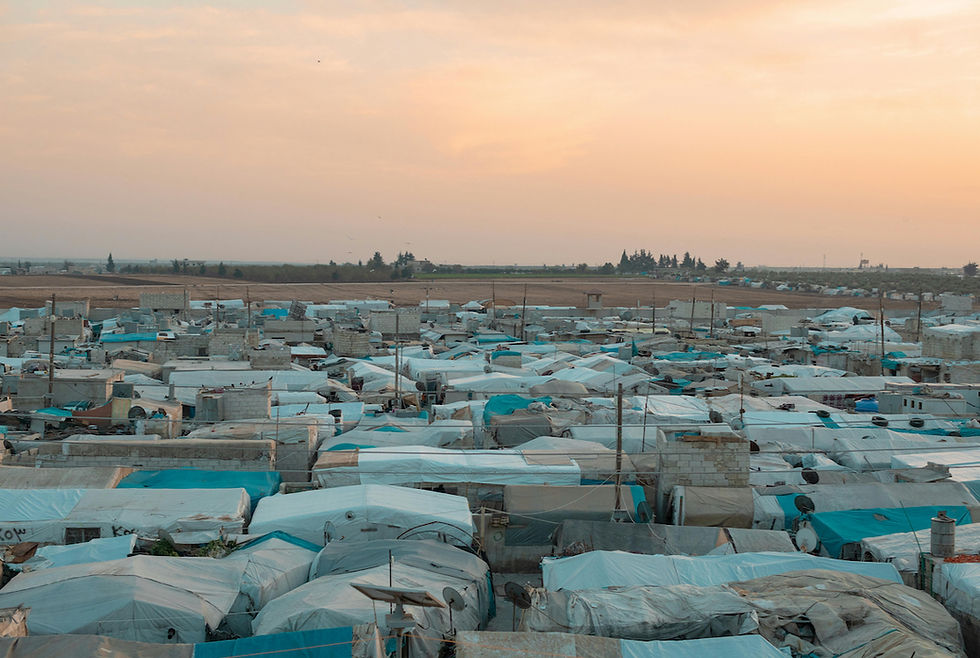
Photo by Josh Withers (Pexels).
Introduction
In Canada, foreign nationals who want to stay in the country can make applications for permanent residence under the humanitarian and compassionate (“H&C”) stream, if there are compelling circumstances in their case. These circumstances include, for example, mental and physical health challenges, concerns over family violence, hardship in their country of origin, and the best interests of any children involved.[1] H&C applications fill an important gap in the immigration system, because they give decision-makers some flexibility to manage compassionate claims, as described above, where individuals are not eligible under other streams (e.g., economic or family reunification). In 2025, however, the expected processing time on H&C applications went from two years to ten years. Because of this change, applicants will now be expected to wait up to a decade to receive a decision on their H&C application. While applications are in processing, applicants are not afforded legal status in the country. As a result, many of them will be left in legal limbo for ten years. This delay may also meaningfully weaken applicants’ ability to challenge their deportation from the country, unless the Federal Court revisits its case law.
Who are H&C Applicants?
H&C applicants are those who would face hardship if they were unable to remain in Canada. There is no closed list of factors that would constitute “hardship”, but H&C applicants are often in highly sympathetic circumstances. As a result, Canada allows them to apply for permanent residence under s. 25(1) of the Immigration and Refugee Protection Act.[2]
The purpose of this provision has been described as offering equitable relief in cases where the facts would cause a reasonable person living in a ‘civilised community’ to feel compelled to ‘relieve the misfortunes’ of the other.[3] Given that this test is a discretionary exercise, it is up to the officer to determine whether an applicant’s hardship is sufficient to warrant relief. In other words, not all hardship will lead to permanent residence.[4] The section is nonetheless an important tool for applicants who are deemed deserving of compassionate relief. It allows many individuals and families to find safety in Canada, even where their case may not quite reach the legal test required for a refugee claim, for instance. In 2024, approximately 19,000 people were admitted to Canada as permanent residents under this category.[5]
Canada’s Increase in H&C Processing Times
The Canadian Government recently released its 2026–2028 Immigration Levels Plan, which dramatically decreases the number of H&C applicants who will be approved each year.[6] Likely as a result of this plan, the processing times for H&C applications have skyrocketed from approximately two years in early 2025 to “more than ten years” by the end of 2025. [7]
The Human Impact of Increased Processing Times
Submitting an H&C application does not provide an applicant with legal status in the country or prevent removal (deportation).[8] For those without status, waiting ten years for an application to be processed will likely be agonising; applicants live in anticipation of removal proceedings and often lack authorisation to work or attend school. They may also face prolonged separation from family members living in other countries. Even if they are able to avoid deportation, remain in the country for ten years, and are eventually approved, they will have lived in limbo for a decade of their lives, the long-term emotional impact of which should not be understated.
Aside from the psychological impact of living in limbo, being without legal status for so long also increases the risk of human rights issues arising. For instance, it is well understood that being without status leads to an increased risk of labour exploitation.[9] Lacking legal status also puts at risk economic and social rights like rights to health and education. [10] These harms are more likely to occur for those living without legal status because they may be, for example, i) involved in an unofficial labour market, ii) less aware of protections and services available to them, and iii) apprehensive about their ability to remain in the country and therefore less likely to take steps to protect themselves from harm. As a result, the increase in processing times will be devastating to the quality of life of the many applicants who would otherwise be living as permanent residents in the country if the decision was made on a timely basis.
The Legal Impact of Increased Processing Times
The delay in processing times will likely also make it harder for applicants to challenge removal proceedings. Although an H&C application does not give an applicant legal status in the country, it is (generally) helpful in fighting a deportation. That is, if an applicant has submitted an H&C application on a timely basis (i.e., not immediately after learning about removal proceedings) and they are awaiting an ‘imminent’ decision, this fact is helpful in pushing back, or deferring, the deportation of that person. The applicant can ask an immigration officer to defer their deportation date (put their deportation on hold) until a decision is made on the H&C application.[11]
Importantly, however, deferrals of removal must be temporary, and the considerations underlying the deferral must be temporary as well[12]: it is unlikely that a ten-year wait will be considered ‘temporary’ by any officer. As a result, the filing of an H&C application is now less likely to be considered relevant to deferral proceedings and stay motions. The government’s long processing times will therefore mean it is materially more difficult to secure a deferral or stay of removal, a result that is objectively unfair to applicants, who have no control over the speed of H&C processing.
Although H&C applications may still be approved post-removal from Canada, the success rates decline significantly once the person is no longer present in Canada.[13] Accordingly, many deserving H&C applicants will be removed from the country before their application can be considered. The result will be that those applicants will be removed from the country and face the very hardship that H&C applications are intended to avoid.
Conclusion
Canada’s significant increase in processing times for H&C applicants will cause harm to those awaiting a decision. Specifically, applicants may be forced to live in limbo for a decade and face psychological and other harms as a result. Moreover, if they are selected for removal from Canada (a likely outcome given the long waits for legal status), they will face an uphill battle in securing a deferral of their removal. As a result, Canada’s failure to process H&C applications in a timely manner puts at risk the wellbeing and human rights of many deserving H&C applicants.
Author bio
Charlotte Hobson is an LL.M Candidate at the University of Cambridge. She previously practiced as an immigration and refugee lawyer in Toronto, Canada.
References:
[1] Government of Canada, Immigration, Refugees and Citizenship Canada, ‘Guide 5291 – Humanitarian and Compassionate Considerations’ (29 September 2025) <https://www.canada.ca/en/immigration-refugees-citizenship/services/application/application-forms-guides/guide-5291-humanitarian-compassionate-considerations.html>. These applications can also be used to obtain flexibility in other applications, the applicant is not eligible for another program, but there are strong reasons to allow the application in any event.
[2] Canada, Immigration and Refugee Protection Act, SC 2001, c 27.
[3] Kanthasamy v Canada (Citizenship and Immigration), 2015 SCC 61 at para 21, citing Chirwa v Canada (Minister of Citizenship and Immigration) (1970), 4 IAC 338 at 350.
[4] Kanthasamy v Canada (Citizenship and Immigration), 2015 SCC 61 at para 23.
[5] Government of Canada, Immigration, Refugees and Citizenship Canada, ‘2025 Annual Report to Parliament on Immigration – Annex: Canada’s 2026 – 2028 Levels Plan’ (2025) <https://www.canada.ca/en/immigration-refugees-citizenship/corporate/publications-manuals/annual-report-parliament-immigration-2025.html#annex>.
[6] Government of Canada, Immigration, Refugees and Citizenship Canada, ‘2025 Annual Report to Parliament on Immigration – Annex: Canada’s 2026 – 2028 Levels Plan’ (2025) <https://www.canada.ca/en/immigration-refugees-citizenship/corporate/publications-manuals/annual-report-parliament-immigration-2025.html#annex>.
[7] Government of Canada, Immigration, Refugees and Citizenship Canada, ‘Check Our Current Processing Times’ (10 November 2025) <https://www.canada.ca/en/immigration-refugees-citizenship/services/application/check-processing-times.html>.
[8] Baron v Canada (Minister of Public Safety and Emergency Preparedness), 2009 FCA 81 at para 50.
[9] See e.g., Lewis, Hannah and Louise Waite, ‘Asylum, Immigration Restrictions and Exploitation: Hyper-precarity as a Lens for Understanding and Tackling Forced Labour’ Anti-Trafficking Review 5 (2015); Beatson, Jesse and Jill Hanley, ‘The Intersection of Exploitation and Coercion in Cases of Canadian Labour Trafficking’, Journal of Law and Social Policy, 26 (2017) (pp. 144, 151).
[10] Ruth M Campbell and others, ‘A Comparison of Health Access Between Permanent Residents, Undocumented Immigrants and Refugee Claimants in Toronto, Canada’, Journal of Immigrant and Minority Health, 16:1 (2014) (p. 175); Magalhaes, Lilian, Christine Carrasco and Denise Gastaldo, ‘Undocumented Migrants in Canada: A Scope Literature Review on Health, Access to Services, and Working Conditions’, Journal of Immigrant and Minority Health, 12:1 (2010) (pp. 132-151).
[11] Baron v Canada (Minister of Public Safety and Emergency Preparedness), 2009 FCA 81 at paras 51, 80; Lewis v Canada (Public Safety and Emergency Preparedness), 2017 FCA 130 at paras 55-58, 80; Forde v Canada (Public Safety and Emergency Preparedness), 2018 FC 1029 at paras 35-40.
[12] Shpati v Canada (Public Safety and Emergency Preparedness), 2011 FCA 286 at para 45; Forde v Canada (Public Safety and Emergency Preparedness), 2018 FC 1029 at para 40.
[13] Access to Information Request by Richard Kurland, ‘H&C Application Decisions: 2013-2018’ (June 2019) 30:6 Lexbase.


Comments