"The Grey Zone of Childhood Statelessness - The Paradigmal Decision on Shamima Begum"
Updated: Apr 16
An Introduction to Statelessness
Statelessness is an amorphous concept. What and who constitutes “stateless people” is unclear and unquantifiable. Foundationally, it simply encompasses those who have no legal affiliation to any country (nationality). Such status essentially excludes a person from social integration by creating a barrier to accessing education, healthcare, work, and perhaps most profoundly, a dignified official burial upon death. While the UN Refugee Agency (UNHCR) estimates 4.4 million people worldwide are victims of this liminality, the World Bank arrives at a larger estimate of 850 million, using broader definition of statelessness - one that includes people who may technically have a nationality but no presentable identification.1 2
Children make up ⅓ of this global struggle - born without identity and forced to live “invisible” to organised society.3 Historically, international agreements have aimed to protect children in this vulnerable position. Attributing this protection, however, can become unclear when someone lies at the boundary between adulthood and childhood. In borderline cases, the original harm may have occurred during childhood, yet the teenager has entered formal adulthood (aged 18+) by the time of or during legal proceedings. This issue had not arisen in the Strasbourg court or UK courts with regard to statelessness specifically. As a result, international legal philosophy was left with a legally undecided grey zone.
Recently, however, a unique set of current affairs have provided insight into how UK courts deal with such penumbral cases, marking the Supreme Court’s high profile decision in Begum a notable persuasive precedent across Europe.4 This article seeks to answer: is the UK setting a desirable standard for how these “grey zone cases” should be addressed?
The United Kingdom and Childhood Statelessness
The 1981 British Nationality Act gives wide discretion to the Secretary of State, who can deprive someone of citizenship even if it would make them stateless when:
a) Citizenship arises from naturalisation;
b) It would be a decision “conducive to the public good”;
c) The person is reasonably believed to be able to become a national of another country.5
The Act specifies that birth in the UK by itself is no longer sufficient for a child to acquire citizenship. This introduces a barrier predominantly to the acquisition of statehood for children of non-nationals. The Home Secretary has discretion over citizenship decisions and must be satisfied that a child is, and always has been, stateless, if they are to acquire national status by virtue simply of their presence in the UK.6
In conjunction, the UK’s obligation under the 1989 United Nations Convention on the Rights of the Child (UNCRC) demands that, in all cases involving children, their “best interests” must be the “primary consideration”.7 Essentially, this means that the safety, development and wellbeing of a child should be paramount in official decisions - espousing ideals of leniency and sympathy.
The interaction of these laws and international obligations – complicated by issues of national security and age – is precisely what is addressed in the contemporary repatriation and statelessness case of Begum.
Shamima Begum and the Weaponisation of Age
In 2019, Home Secretary Sajid Javid employed his statutory powers to deprive Shamima Begum of citizenship on the grounds it was “conducive to the public good”.8 It was presented to the Home Secretary that Begum, aged 15, had travelled to ISIS-controlled territory and married an ISIS militant, therefore consciously aligning herself with their terrorist ideology.9 Such allegations, paired with the alleged Bangladeshi citizenship held by Begum, allowed the Home Secretary to revoke her citizenship on the grounds of public safety without breaching the British Nationality Act safeguards against causing statelessness. The revocation was ordered soon after Begum passed 18 years of age. This meant the state no longer had a legal duty to consider her “best interests” despite the key fact the matter rooted from childhood affairs and juvenile exploitation.
The Specialist Immigration Appeals Commission (SIAC) heard Begum’s appeal to this decision. The court did not engage with the complications and sensitivities surrounding age in the processing of this case. The now legal adult Begum experienced no benefits from child-specific protections, though her youth was then subsequently used by judges to her detriment. Being under 21 and having blood ties to Bangladesh meant she was automatically a dual citizen under Bangladeshi law. Thus, the courts and Home Secretary could claim she would not be left stateless if her British citizenship was revoked.10 It seems then, Begum’s vulnerable age of 19 was exploited. She was simultaneously old enough to be excluded from child protections in court, yet also young enough to be assigned and expected to accept an alternate nationality which she had never meaningfully held. Significantly, this was all ruled after the Bangladeshi government had explicitly rejected that Begum was entitled to citizenship, highlighting how this approach seemed more a decision of legal convenience than thoughtful jurisprudence.11 As a result, Begum currently faces de facto statelessness.12
The Supreme Court's Troubling Agreement
The Supreme Court later upheld this SIAC decision, affirming that the Home Secretary acted lawfully in refusing Begum leave to enter the UK and barring her return even if only to appeal court decisions. The judgement, in its elaboration, laid down yet another problematic idea. It was ruled that the SIAC’s duty here was solely to judge whether the Home Secretary’s decision was reasonable in terms of being legally permissible, rather than in terms of what the correct decision should have been based on merits, evidence and policy.13
Academics have held such limitations signify “the equilibrium of power has further shifted in favour of the [government]” and challenges the role of courts in protecting individuals' rights.14 Such unfettered and broad governmental powers significantly undermine mandated child protections because they offer politicians latitude to depart from UNCRC obligations. If a decision fits within the vague requirement of “conducive to the public good” and does not formally cause statelessness, the Home Secretary can in certain circumstances strip citizenship and thereafter refuse appeal to courts with little challenge.15 16 Such a doctrine will target minority heritage children most vividly because the statutory prohibition on causing statelessness is more easily overcome in their cases. This is because they are more likely to have an alternate “statehood” (nationality) which they can acquire. Begum reaffirms this weakness in judicial functioning by revealing children subject to this injustice are too limited in their right to appeal such decisions.
European Courts and the Grey Zone of Age
The restriction of court discretion sits uneasily with the ideal of incorporating ECHR principles. The European Court of Human Rights (ECtHR) has more stable general principles on attributing child protections to a party. It is likely the following principles would have been referred to by UK courts as persuasive precedent had it been decided depriving citizenship was not solely a matter of governmental discretion.17
First, the ECtHR defines childhood much more flexibly, taking into account “level of maturity and intellectual and emotional capacities” rather than age alone in discerning the application of extra protective measures.18 Second, it also accepts the defendant’s age at the time of wrongdoing rather than when the case comes to court, as the foundation for legal procedure.19
Applying these principles may introduce a new, more dynamic and coherent approach to elucidating this “grey zone”. By engaging explicitly with these procedural complexities surrounding “childhood”, her youthful vulnerability and victimhood may well be attributed greater weight in deciding her right to return. Begum may be principally entitled to UNCRC stipulated “best interests” treatment which would play a determinative role in assessing the legitimacy of revoking her British citizenship.20
Conclusion
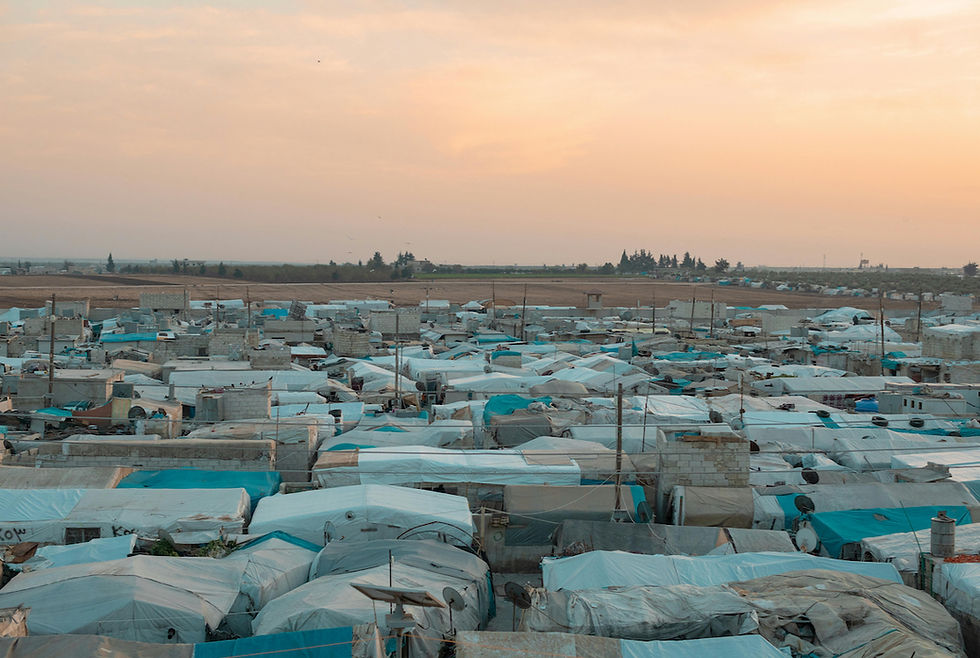
Ultimately, it seems that UK courts have had a complicated and unavoidably controversial role in addressing the global problem of childhood statelessness. The disregard in both risking Begum’s practical statelessness and not addressing her vulnerability as a child presents itself as perhaps legally defensible, but morally and conceptually unconvincing. Begum, currently in a Syrian internment camp, is set to take the case to the ECtHR where it will be seen if greater attention is to be paid to the complex role childhood plays in this case.
Author Bio
Rizah Khan is a first-year Undergraduate reading Law at Downing College, Cambridge. He has an interest in global issues of statelessness and the unique rights of children in the international sphere.
References
UNHCR. 2024. ‘Stateless People’, UNHCR <https://www.unhcr.org/about-unhcr/who-we-protect/stateless-people>
‘Data | Identification for Development’. [n.d.]. Id4d.worldbank.org <https://id4d.worldbank.org/global-dataset>
‘An Open Letter to the World’s Children’. 2019. Unicef.org <https://www.unicef.org/reports/open-letter-to-worlds-children-2019>
Begum v Secretary of State for the Home Department. 2021. Available at: <https://caselaw.statelessness.eu/sites/default/files/decisions/uksc-begum.pdf>
‘British Nationality Act 1981, S. 40(4A). ’. Available At: <https://www.legislation.gov.uk/ukpga/1981/61/section/40>
‘British Nationality Act 1981, S 40(2)’.
‘United Nations Convention on the Rights of the Child (Adopted 20 November 1989, Entered into Force 2 September 1990), Article 3(1), UNTS 1577 UNTS 3’,. Available At <https://www.ohchr.org/en/instruments-mechanisms/instruments/convention-rights-child>
Begum (n 4), Para 1
Ibid, Para 17
Begum v Secretary of State for the Home Department. 2024. EWCA Civ. Available at: <https://www.judiciary.uk/wp-content/uploads/2024/02/Begum-v-SSHD-CA-2023-000900-2024-EWCA-Civ-152.pdf>, Para 30
Addley, Esther, and Redwan Ahmed. 2019. ‘Shamima Begum Will Not Be Allowed Here, Says Bangladesh’, The Guardian <https://www.theguardian.com/uk-news/2019/feb/20/rights-of-shamima-begums-son-not-affected-says-javid>
Ibid, Para 53(3)
Begum (n 4), Para 129, 130, 134
Riaz, Ayesha. 2023. ‘Increasing the Powers of the Secretary of State for the Home Department to Strip Individuals of Their British Citizenship: R (on the Application of Begum) v SSHD’, Modern Law Review, 86.6 (Wiley-Blackwell): 1517–30 <https://doi.org/10.1111/1468-2230.12820>
‘British Nationality Act 1981, S. 40(4B). ’. Available At: <https://www.legislation.gov.uk/ukpga/1981/61/section/40>
Here, the circumstance was national security - Begum (n 4), Para 135
Human Rights Act 1998 s2(1) applying ECHR art6 rights
T v United Kingdom (App No 24724/94), Judgment of 16 December 1999, Para 82-84.
Panovits v Cyprus, (App No. 4268/04), Judgement of 11 December 2008 Para 67
UNCRC Art3(1) (n 7)


Comments